£0.00 0 items
Mental Health Awareness Week
Taking Action for Better Mental Health
This Mental Health Awareness Week is a reminder that improving our mental wellbeing isn’t just about awareness — it’s about action.
At the heart of the Human Givens (HG) approach is the understanding that for us to thrive mentally and emotionally, we all have nine innate emotional needs. One of the most powerful ways we support our wellbeing is by actively meeting those needs in our daily lives.
One important need is connection with others.
When we take steps to build and maintain meaningful connections, we create:
- A sense of belonging
- Emotional support during difficult times
- Opportunities to contribute and feel valued
- Protection against isolation and stress
Humans are social beings — we are wired to connect. Being part of a group larger than ourselves allows us to experience friendship, fun, love, and a sense of shared purpose.
Take action…
This week is your invitation to reflect on your own connections, reach out to others, and rediscover the strength that comes from feeling part of something bigger.
Mental Health Awareness Week is an opportunity to take small but meaningful steps for your wellbeing.
You might choose to:
-
Join a group or activity that interests you
-
Offer support or kindness to someone else
-
Spend time strengthening the relationships that matter most
- Reconnect with nature – enjoy some fresh air with the local community
Small actions can make a powerful difference.
By taking action and nurturing our connections, we support not only our own mental health — but the wellbeing of those around us too.
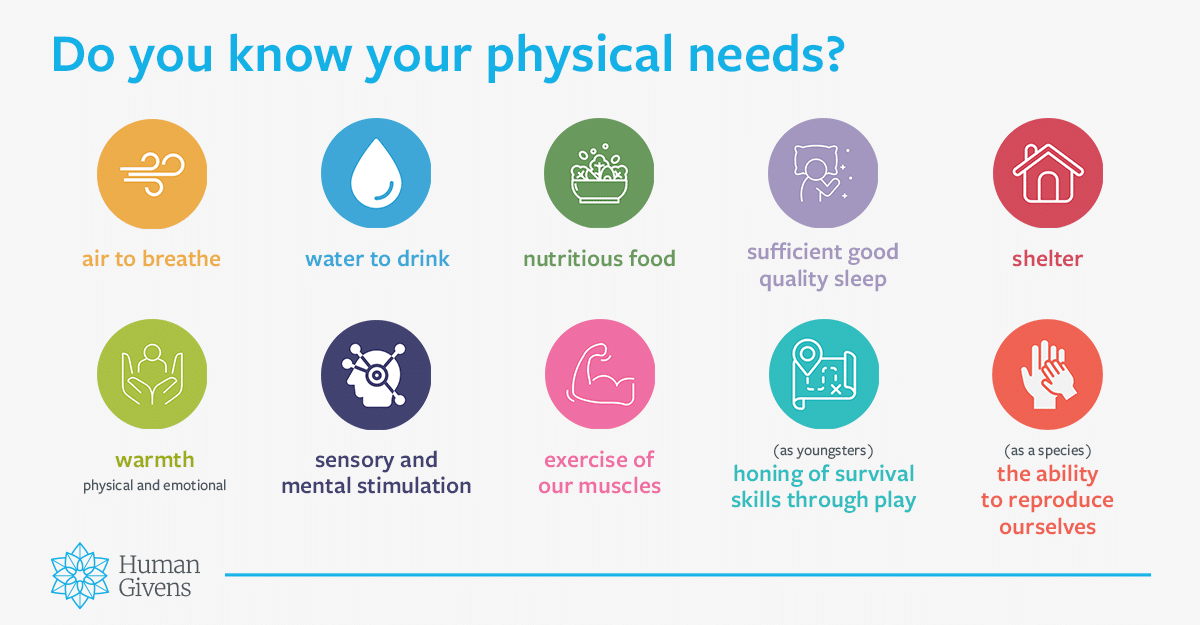
Getting our physical needs met healthily is just as important as ensuring that our innate emotional needs are met well, since our physical health impacts on our mental health and vice versa
Dr Andrew Morrice
Why meeting your needs matters
Research shows that we thrive when our essential emotional needs are being met in healthy, balanced ways – needs such as autonomy, security, emotional and community connection, achievement and meaning and purpose. And our needs are most likely to be met when we are using our innate resources – abilities such as memory, empathy, imagination, problem solving, thinking skills and managing emotions – to help us.
It is when people feel overwhelmed, out of their depth or isolated, or when they don’t know how to use their innate resources effectively, that they start to experience psychological symptoms such as stress, anxiety and depression or resort to unhealthy escape valves such as blowing their tops, harming others, or falling into addictions. Severe depression can lead to psychosis. And traumatic experiences can lead to any of these symptoms.
None of this happens when our lives are on track, and when we feel respected and valued as human beings.
Explore more about the human givens approach
The power of ‘7:11’ breathing
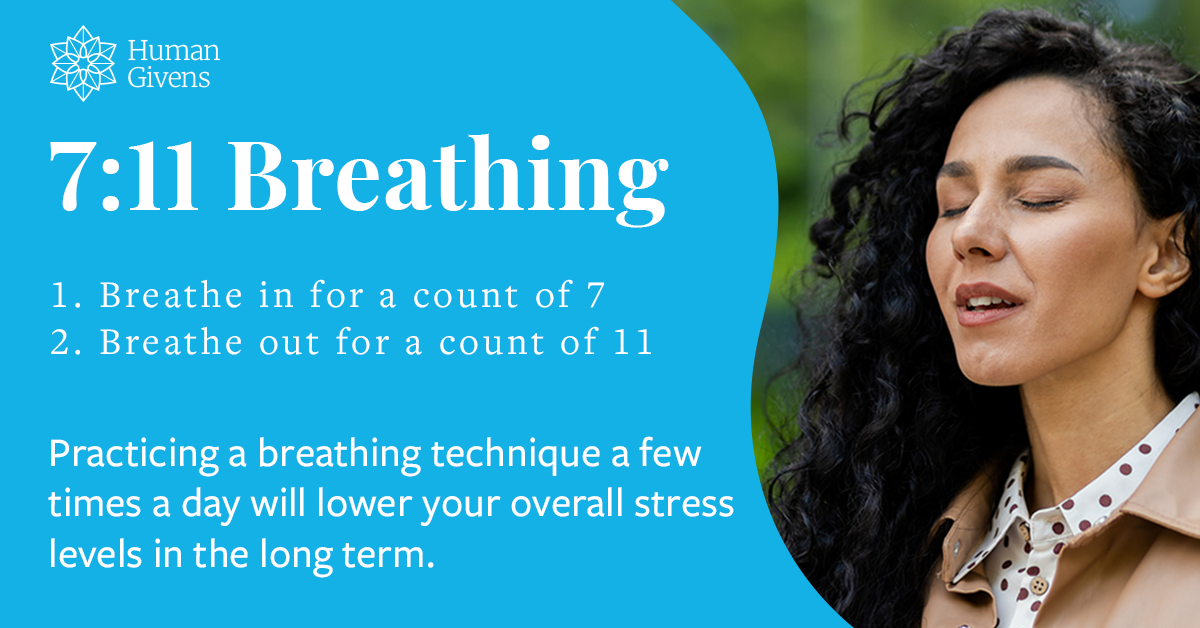
On our Human Givens College training courses, we teach a technique which Joe Griffin named ‘7:11’ breathing, because it’s the most powerful technique we know.
Here is how you do it, and it is as easy as it sounds:
- Breathe in for a count of 7.
- Then breathe out for a count of 11.
If you find that it’s difficult to lengthen your breaths to a count of 11 or 7, then reduce the count to breathing in for 3 and out to 5, or whatever suits you best, as long as the out-breath is longer than the in-breath.
Continue in this way for 5-10 minutes or longer if you have time – and enjoy the calming effect it will have on your mind and body. An added bonus of 7:11 breathing is that the very act of counting to 7 or 11 is a distraction technique, taking your mind off your immediate concerns.
This 7:11 breathing technique for relaxing quickly is the most powerful we know and has been used for thousands of years throughout the world.
Make sure that when you are breathing in, you are doing deep ‘diaphragmatic breathing’ (your diaphragm moves down and pushes your stomach out as you take in a breath) rather than shallower higher lung breathing.